The Union Budget 2026 didn’t arrive with fireworks.
There were no dramatic tax cuts, no headline-grabbing giveaways, no instant gratification for voters waiting for a windfall. Instead, it landed quietly — measured, restrained, and very deliberate.
For many, that restraint felt underwhelming. But for anyone looking closely, this budget was making a different argument: stability matters more than spectacle.
This Budget Wasn’t About Impressing You
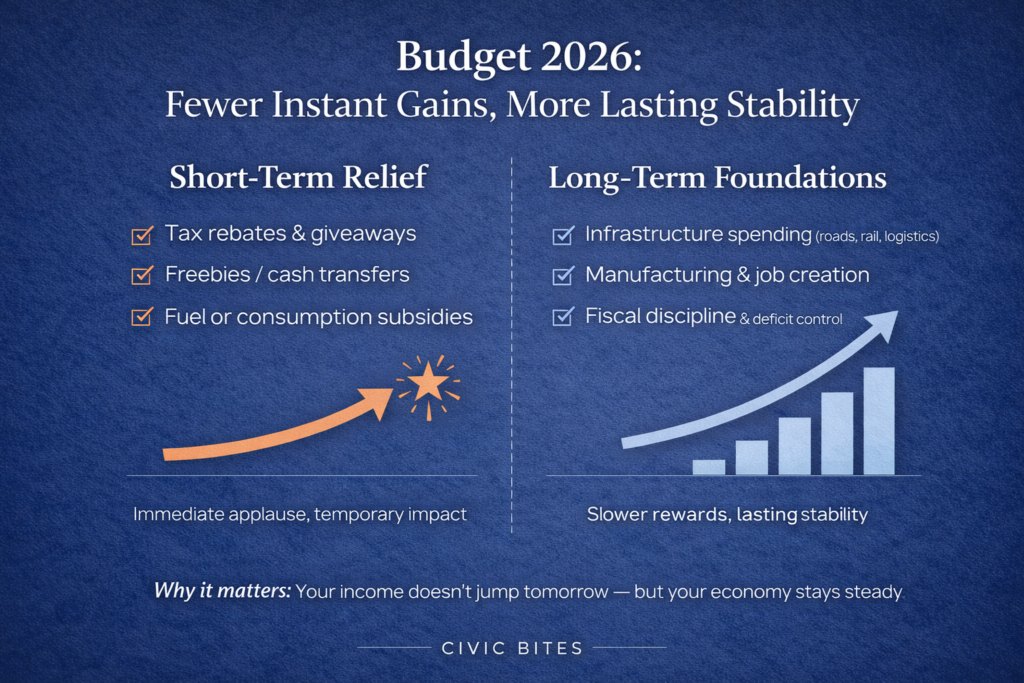
Budgets are often judged by what they give immediately — lower taxes, cheaper fuel, more money in hand. Budget 2026 resists that temptation.
It does not try to buy applause in the short term. Instead, it focuses on maintaining fiscal balance, controlling deficits, and continuing investments already in motion.
In simpler terms, this is a budget that assumes citizens can handle delayed rewards — as long as the system remains stable.
What This Budget Is Really Betting On
At its core, Budget 2026 is betting on continuity.
It assumes that the biggest economic risks right now are not a lack of announcements, but instability — fiscal, monetary, and political. Inflation control, debt discipline, and steady public investment matter more than sudden giveaways. This approach aligns with the idea that governments earn credibility not through yearly shocks, but through predictability. For households and businesses alike, knowing what won’t change can be just as important as knowing what will.
How This Shows Up in Everyday Life
For most people, Budget 2026 won’t announce itself loudly. You won’t feel it immediately when you swipe your card, pay your rent, or check your salary slip.
But its effects sit in the background — in stable interest rates, predictable fuel pricing, and fewer sudden policy reversals. That matters more than it sounds.
When inflation stays controlled, household budgets breathe easier. When government borrowing stays disciplined, future tax shocks become less likely. And when public spending continues steadily — rather than erratically — jobs and investments feel less fragile.
In other words, this budget isn’t trying to excite households. It’s trying not to unsettle them.
Leave a Reply