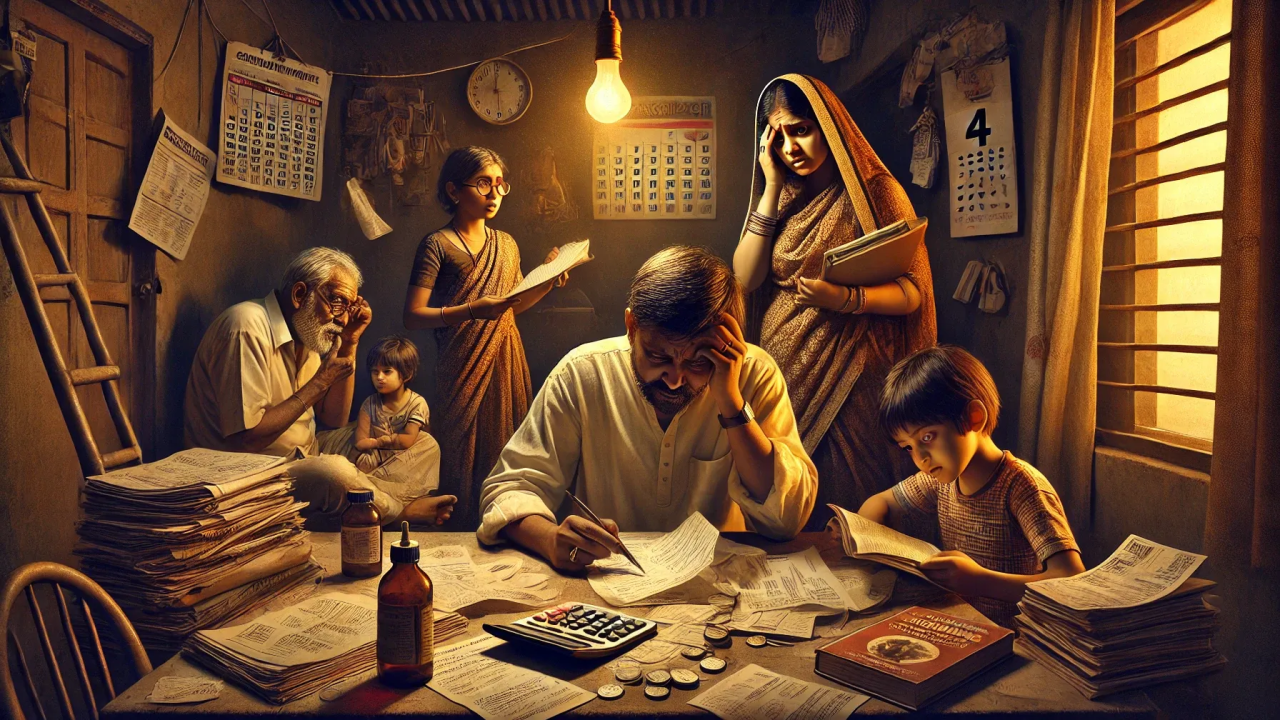
India is one of the fastest-growing major economies in the world. GDP numbers look strong, start-up headlines are optimistic, and macroeconomic indicators often signal progress.
Many readers search for why middle class Indians feel poorer despite economic growth, and the reasons go beyond inflation alone
Yet for millions of middle-class Indians, daily life feels more financially stressful than it did a decade ago.
This is not just a feeling. The data — and lived experience — tell the same story.
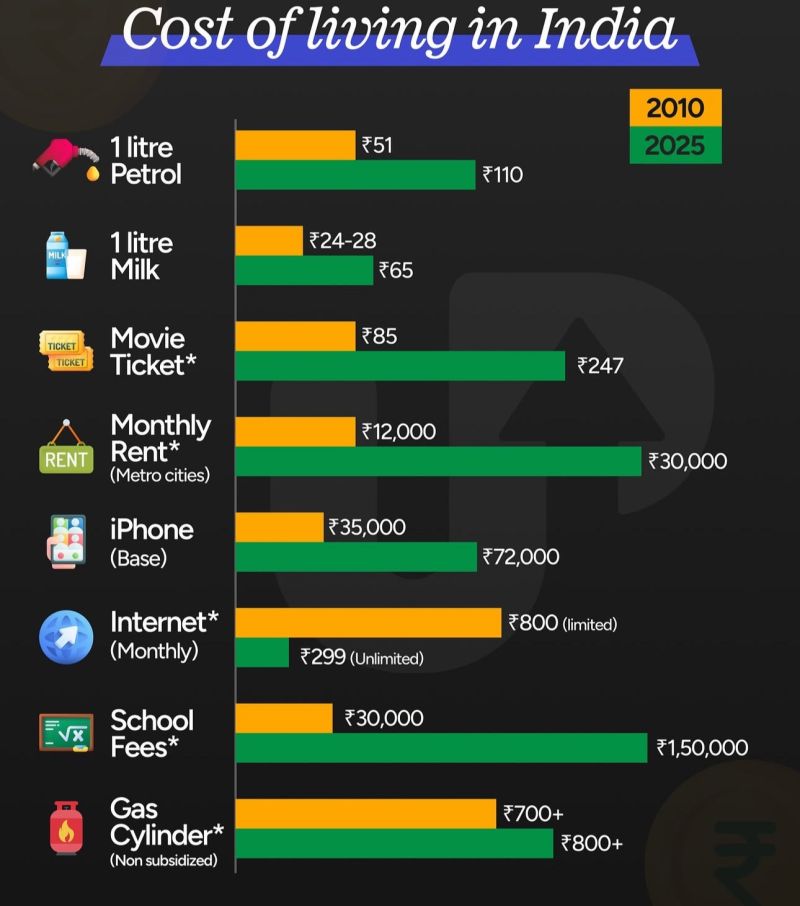
Illustrative comparison of commonly reported household costs over time. Prices vary by city and source.
This single visual explains more than 500 words ever could.
Between 2010 and 2025:
- Petrol prices more than doubled
- Monthly rents in metro cities rose sharply
- School fees increased by multiples, not percentages
- Healthcare and utilities became significantly costlier
Income growth, meanwhile, has been incremental — not exponential.
This widening gap is the core reason middle-class families feel poorer.
Economic Growth Does Not Mean Household Prosperity
GDP growth measures the total size of the economy.
It does not measure how comfortable households feel paying monthly bills.
For middle-class families, prosperity means:
- Covering essentials without anxiety
- Saving consistently
- Preparing for emergencies
When basic costs rise faster than salaries, economic growth becomes abstract — not personal.
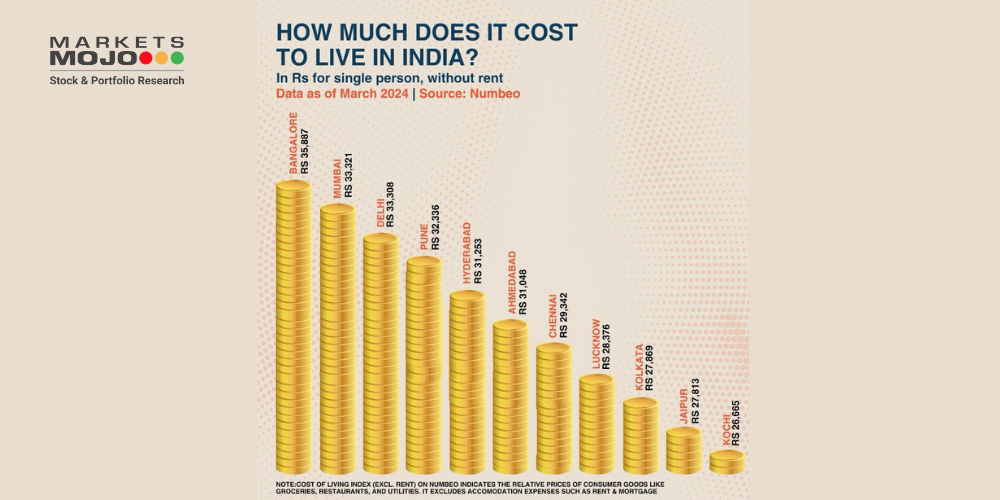
“Data as of March 2024 | Source: Numbeo”
What this image reveals
Living costs vary by city, but the pressure is universal.
Urban India faces:
- High rent-to-income ratios
- Increased spending on transport, food, and utilities
- Limited affordable housing options
Even cities considered “cheaper” now demand a higher baseline income just to maintain a stable lifestyle.
For the middle class, urban aspiration has become an expensive commitment.
Why Taxes and Rising Costs Make Middle-Class Indians Feel Poorer
Middle-class Indians often fall into a narrow and uncomfortable zone:
- Too “rich” for subsidies
- Too “poor” to absorb rising taxes easily
Beyond income tax, households pay:
- GST on daily consumption
- High fuel taxes that affect everything from groceries to commuting
- Service charges embedded in banking, telecom, insurance, and healthcare
These costs don’t feel like taxes — but they steadily reduce disposable income.
Job Growth Has Not Kept Pace With the Economy
While the economy has grown, stable job creation has lagged.
Many middle-class jobs today are:
- Contract-based
- Gig or freelance
- Lacking long-term security
Even skilled professionals face:
- Slower salary growth
- Fewer promotions
- Mid-career uncertainty
Growth without secure employment weakens financial confidence.
Many families underestimate how much small, recurring expenses add up. A simple expense tracker can help bring clarity before making bigger financial decisions.
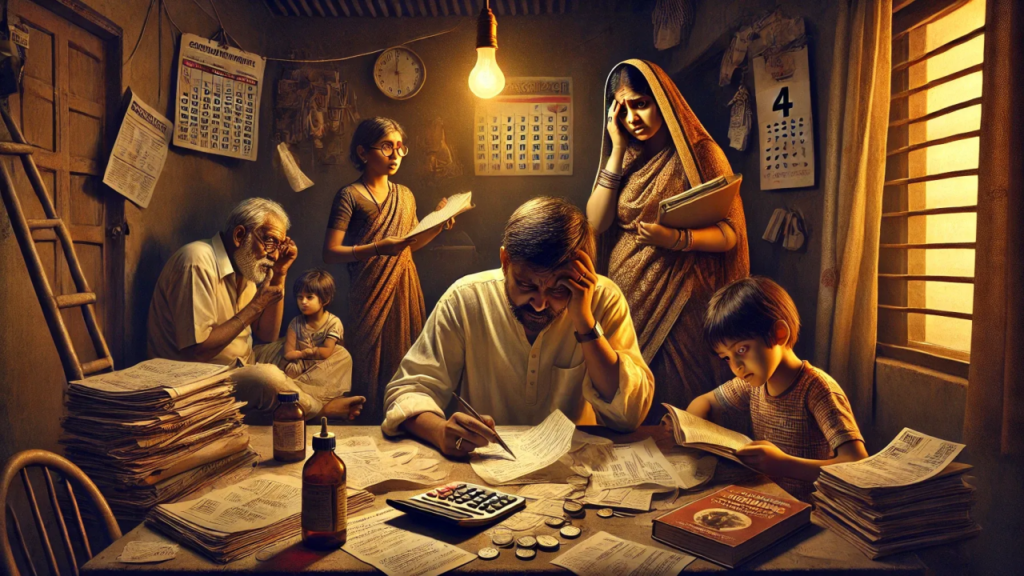
Why this image hits emotionally
This is the lived reality behind the data:
- Parents balancing education costs
- Healthcare expenses creating anxiety
- Savings constantly under pressure
This is not poverty.
But it is persistent financial stress — the kind that erodes optimism over time.
If you want to understand why money stress affects even high earners, this book explains the emotional side of wealth better than any budget advice.
Why Economic Growth Feels Unequal
A large share of recent economic gains has come from:
- Stock markets
- Real estate
- Business ownership
Middle-class families dependent on salaries rarely benefit directly from these gains.
As wealth concentrates in assets rather than wages, the gap between national success and personal well-being grows wider.
Why This Matters for India’s Future
When the middle class feels financially insecure:
- Consumption slows
- Risk-taking declines
- Social frustration increases
A strong middle class is not just an economic goal — it is a stabilising force for democracy and long-term growth.
For readers looking for practical, India-specific financial clarity, this book breaks down saving, investing, and money decisions in a realistic way.
Leave a Reply