India’s political landscape changed dramatically in 2014, when Narendra Modi became Prime Minister with the strongest mandate seen in three decades. The Bharatiya Janata Party (BJP) secured an outright majority in Parliament — something no single party had achieved since 1984.
Modi’s ascent, however, was not sudden. It was the outcome of a long political journey, strategic positioning, and a transformation in how Indian voters evaluated leadership. To understand modern Indian politics, one must understand how Modi evolved from a regional leader into the most dominant national figure of his era.
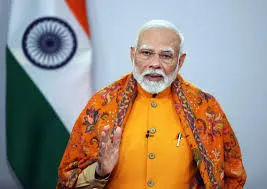
Narendra Modi’s Early Life and RSS Background
Narendra Modi did not emerge from a political dynasty. Born in Vadnagar, Gujarat, he came from a modest background and became associated early with the Rashtriya Swayamsevak Sangh (RSS), a Hindu nationalist organization.
The RSS played a crucial role in shaping Modi’s:
- Ideological orientation
- Organizational discipline
- Political network
His entry into mainstream politics came through the Bharatiya Janata Party (BJP), where he worked as an organizer before being appointed Chief Minister of Gujarat in 2001.
His tenure faced intense scrutiny following the 2002 Gujarat riots, an episode that influenced his national perception for years. Yet within Gujarat, Modi cultivated a reputation centered on governance and development.
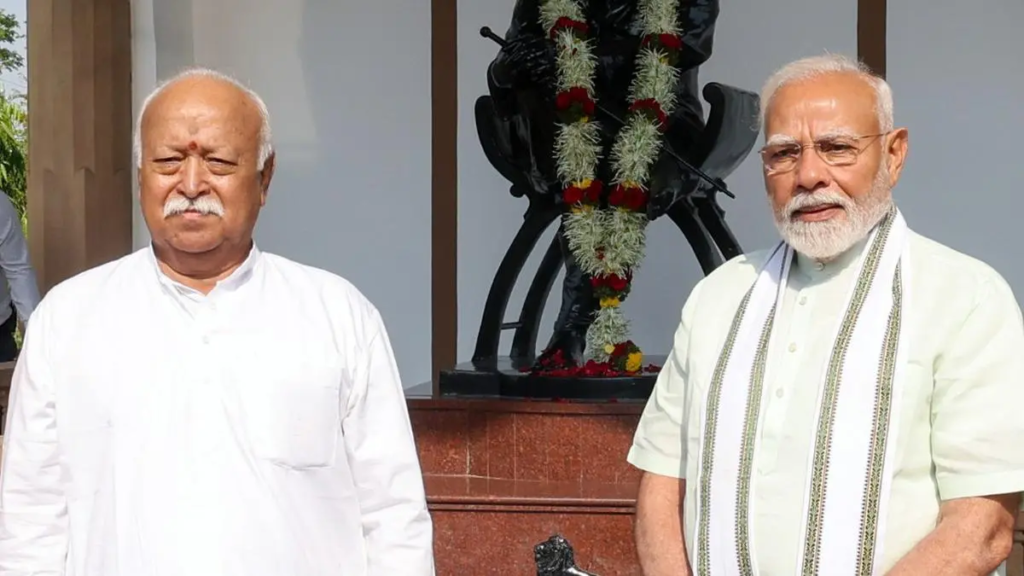
The Gujarat Model: Development as Political Strategy
Between 2001 and 2014, Gujarat experienced rapid industrialization and infrastructure expansion. Modi’s administration emphasized:
- Highway and port development
- Electricity and power reforms
- Business-friendly policies
- Investment summits (Vibrant Gujarat)
The phrase “Gujarat Model of Development” became a powerful political brand. While economists debated its depth and inclusivity, the narrative itself resonated strongly with voters nationwide.
For many Indians frustrated with bureaucratic inertia, Modi projected the image of a decisive, CEO-style administrator rather than a conventional politician.
The 2014 General Election: A Turning Point
By 2013, the Congress-led government faced anti-incumbency pressures driven by:
- Corruption scandals
- Inflation concerns
- Economic slowdown
The BJP positioned Modi as its prime ministerial candidate, a decision seen as both bold and risky.
Why the Campaign Succeeded
The 2014 election campaign marked a shift in Indian political communication:
- Aggressive use of social media
- Massive rallies and high-energy speeches
- Presidential-style leadership projection
- Strong slogans like “Achhe Din Aane Waale Hain”
The election became framed not as party vs party, but Modi vs the system.
Election Outcome
- BJP won 282 seats independently
- First single-party majority in 30 years
- Modi became Prime Minister
This victory fundamentally altered Indian electoral politics.
Modi’s Governing Style: Centralization and Branding
Once in office, Modi introduced a governance approach characterized by:
- Centralized decision-making
- High-visibility flagship programs
- Strong leader-centric communication
Major initiatives included:
- Swachh Bharat Mission
- Make in India
- Digital India
- Jan Dhan Yojana
His monthly radio address Mann Ki Baat created a direct communication channel with citizens, bypassing traditional media filters.
However, critics argued that decision-making became increasingly concentrated within the Prime Minister’s Office (PMO).
Demonetization and Policy Controversies
One of the most debated decisions of Modi’s tenure was demonetization in 2016, when high-value currency notes representing 86% of India’s cash supply were invalidated overnight.
Supporters cited goals such as:
- Tackling black money
- Promoting digital payments
- Formalizing the economy
Critics highlighted:
- Economic disruption
- Informal sector distress
- Questionable long-term benefits
Regardless of interpretation, the move reinforced Modi’s image as a leader willing to take bold, unconventional decisions.
The 2019 Election: Leadership Over Performance
Despite economic headwinds and employment concerns, Modi secured a larger mandate in 2019, with the BJP winning 303 seats.
Factors Behind the Victory
The campaign emphasis shifted toward:
- National security (post-Pulwama & Balakot)
- Strong leadership narrative
- Cultural nationalism
- Welfare scheme outreach
Modi’s appeal increasingly transcended traditional economic metrics.
Why Narendra Modi’s Rise Reshaped Indian Politics
Modi’s ascent produced structural shifts in Indian politics:
1. Decline of Dynastic Dominance
His rise challenged family-centric leadership models long prevalent in India.
2. Narrative-Driven Campaigning
Development, nationalism, and leadership branding gained prominence over caste-centric calculations.
3. Executive Centralization
Power consolidation within the executive became more pronounced.
4. Mainstreaming of Hindu Nationalism
Policies such as:
- Revocation of Article 370
- Citizenship Amendment Act (CAA)
- Ram Temple construction
signaled ideological transformations.
The Broader Democratic Debate
Modi’s leadership continues to generate strong debate.
Supporters argue:
- Decisive governance
- Improved global positioning
- Administrative efficiency
Critics warn about:
- Institutional independence
- Media freedom
- Space for dissent
This tension defines contemporary political discourse.
Conclusion: Understanding Modi’s Political Legacy
Narendra Modi’s journey — from RSS pracharak to Gujarat Chief Minister to two-term Prime Minister — represents one of the most consequential transformations in modern Indian politics.
Regardless of ideological perspective, his rise altered:
- Electoral strategy
- Leadership communication
- Governance expectations
Understanding this trajectory is essential for analyzing India’s present and future political landscape.
Leave a Reply